Vegetables, fruits, berries, herbs, and flowers.
Potatoes
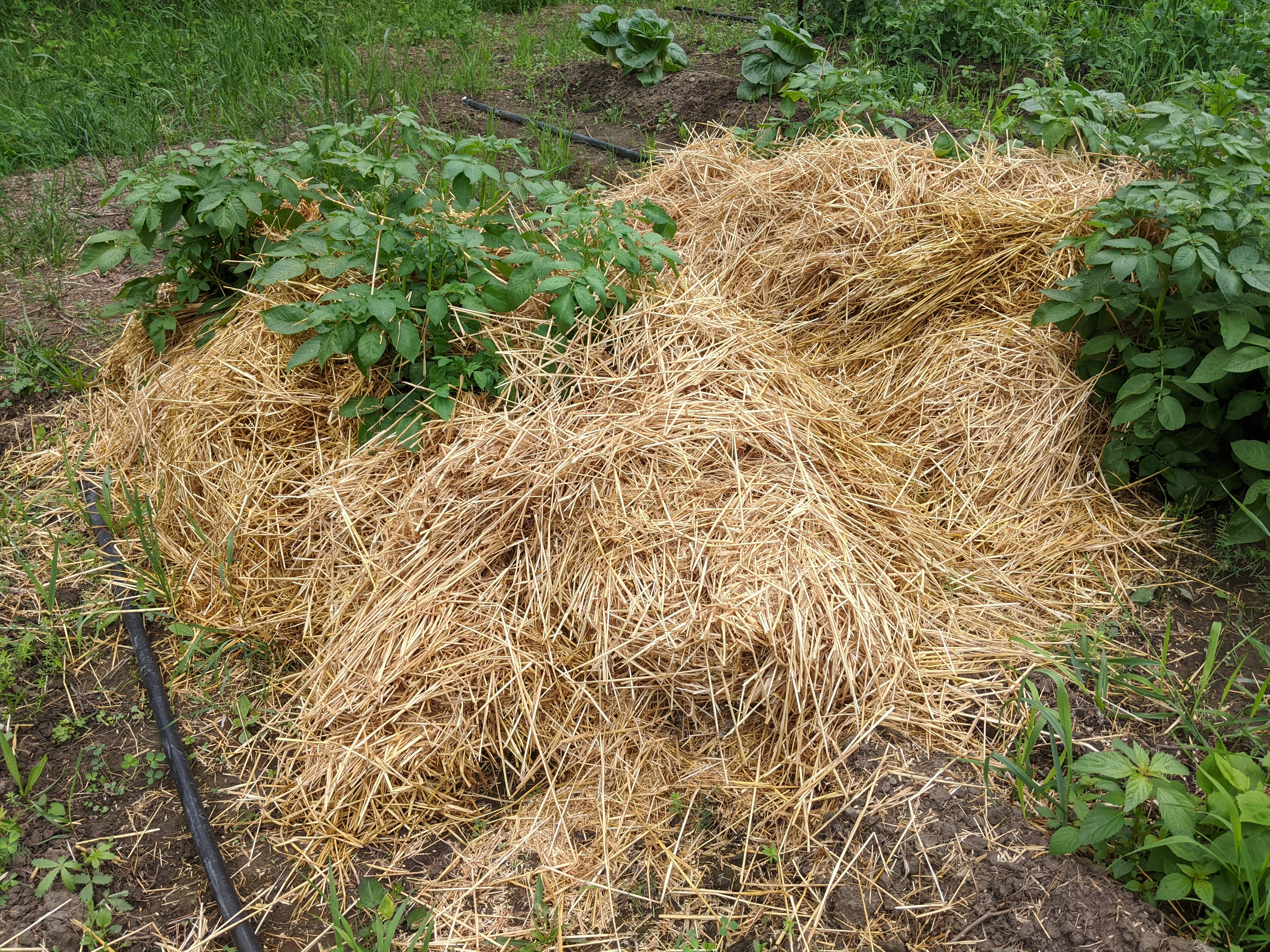
We planted three types of potatoes from seed potatoes we bought from a local garden center. A row of Kennebec and Russets were planeted May 21 and another row of Yukon Gold and the remaining Russets were planted the next day May 22. Kennebec and Yukon Golds are Determinate types of potatoes whereas Russets are an indeterminate type. This means that the practice of “Hilling” the potatoes to get additional layers of growth would only work with the Russet (indeterminate). We used straw to “Hill” the Russet potatoes and are looking forward to seeing if this technique will work and yeild more potatoes. Yukon Golds are ready after 80-95 days, Kennebec after 105 days, and Russets after 100-115 days. It’s July 5th now and all potatoes plants are flowering.
I learned that a potatoes are ready for harvest once the plant turned from green to yellow and falls over. We have been harvesting Yukon Gold potatoes bit by bit for immediate consumption since mid-august. I noticed some of the top potatoes start to be exposed and threw a few handfuls of dirt on them to try and stop them from going green. The remaining Yukon potatoes were harvested on September 2 (2 weeks late). I didn’t wash them and put half of them in a cardboard box and the other half out on a shelf outside to “harden” so they’ll last longer in storage. The Kennebec potatoes were all harvested late on September 6 (1 week late). I hadn’t put extra dirt on the Kennebec potatoes and many of them were very green and could not be kept. The remainder were laid out in the basement to harden. The Kennebec don’t seem good for much more then mashed potatoes.
NEXT YEAR: Stick with just Yukon Gold and Russet, no Kennebec. Hill both determinate and indeterminate potatoes once to prevent them being exposed and turning green. Keep hilling the Russets to encourage additional growth and more potatoes.
Pak Choi
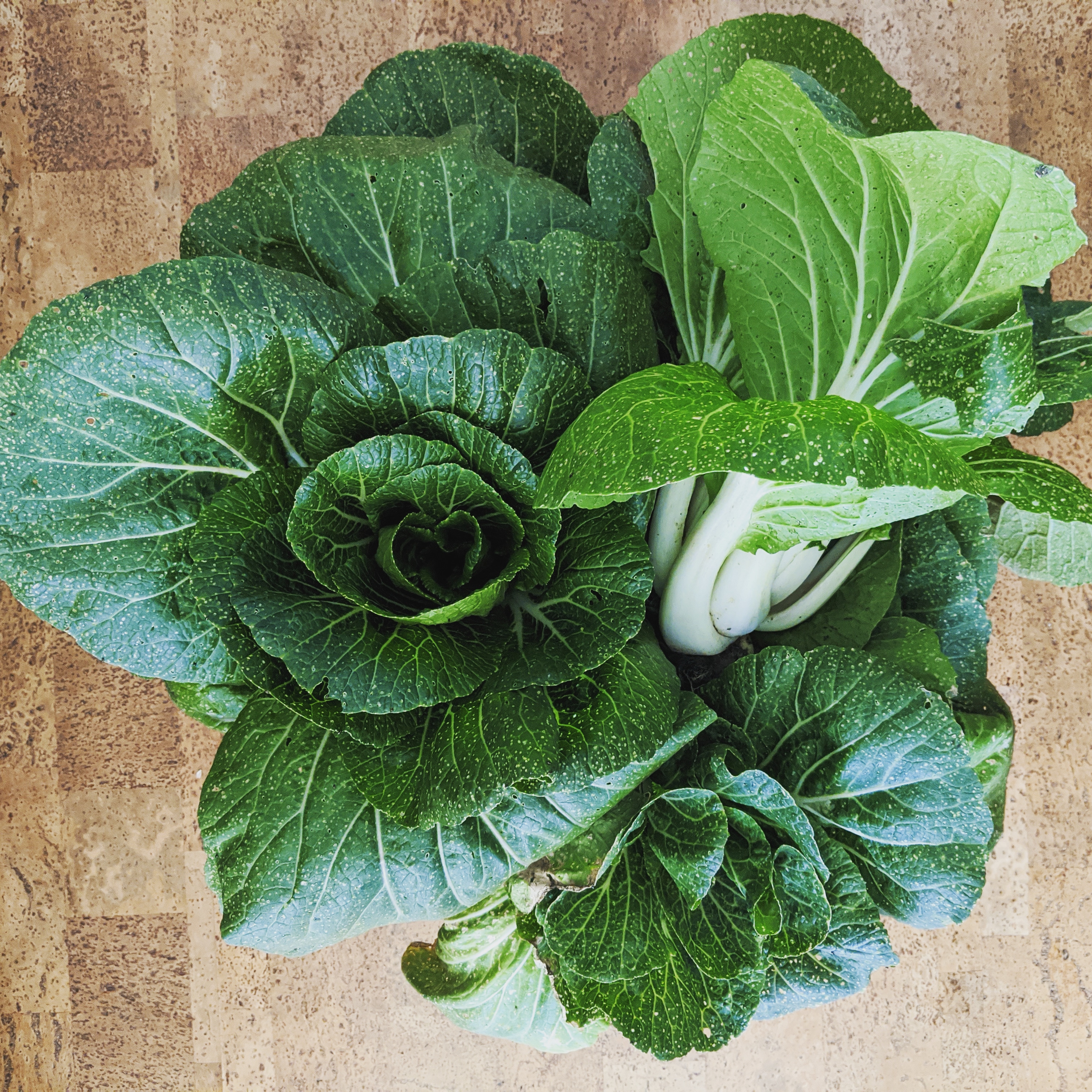
These are so easy to grow and get absolutely huge. The only pest we encountered on them was flea beetles which I believe introduced some sort of stem rot bacteria which is now starting to kill the few remaining plants. While washing them I also discovered a few worms too. After eating stir fry Pak Choi for a week we were feeling pretty done but there was still tons left. We had purchased a dehydrator while it was on sale a few months ago so I looked up how to preserve this using that.
NEXT YEAR: Companion plant with some radishes and nasturtiums to attract flea beetles away from Pak Choi. Stagger planting times so they are not all mature at the same time. Harvest sooner so the root and stem doesn’t go to rot.
Zucchini
We planted our Zucchini according to the Veseys seed package on May 19, 2020. The germination rate was excellent and we ended up with too many plants too close together. Shortly after they sprouted we had a severe cucumber beetles infestation. I attempted to use the soapy water spray method but found that only killed about 20-30% of them. I spread Diamataious earth around the plants but that also didn’t have much of an effect (short term anyways, may have helped long term) so we did a permethrin based spray and the bugs were gone and stayed gone for a solid week or two. This gave the Zucchini time to grow big enough to be able to handle a couple bugs. They never came back as strong as the original infestation so the method worked well. Once the plants were larger they began to become a bit crowded so help of them were transplanted into another row. The transplanting process slowed their growth but they recovered after about a week. Fertilizer (16-16-16 & 30-0-6) was added twice during the growing process prior to the first harvest). The first harvest of Zucchini was on July 10 (53 days after planting).
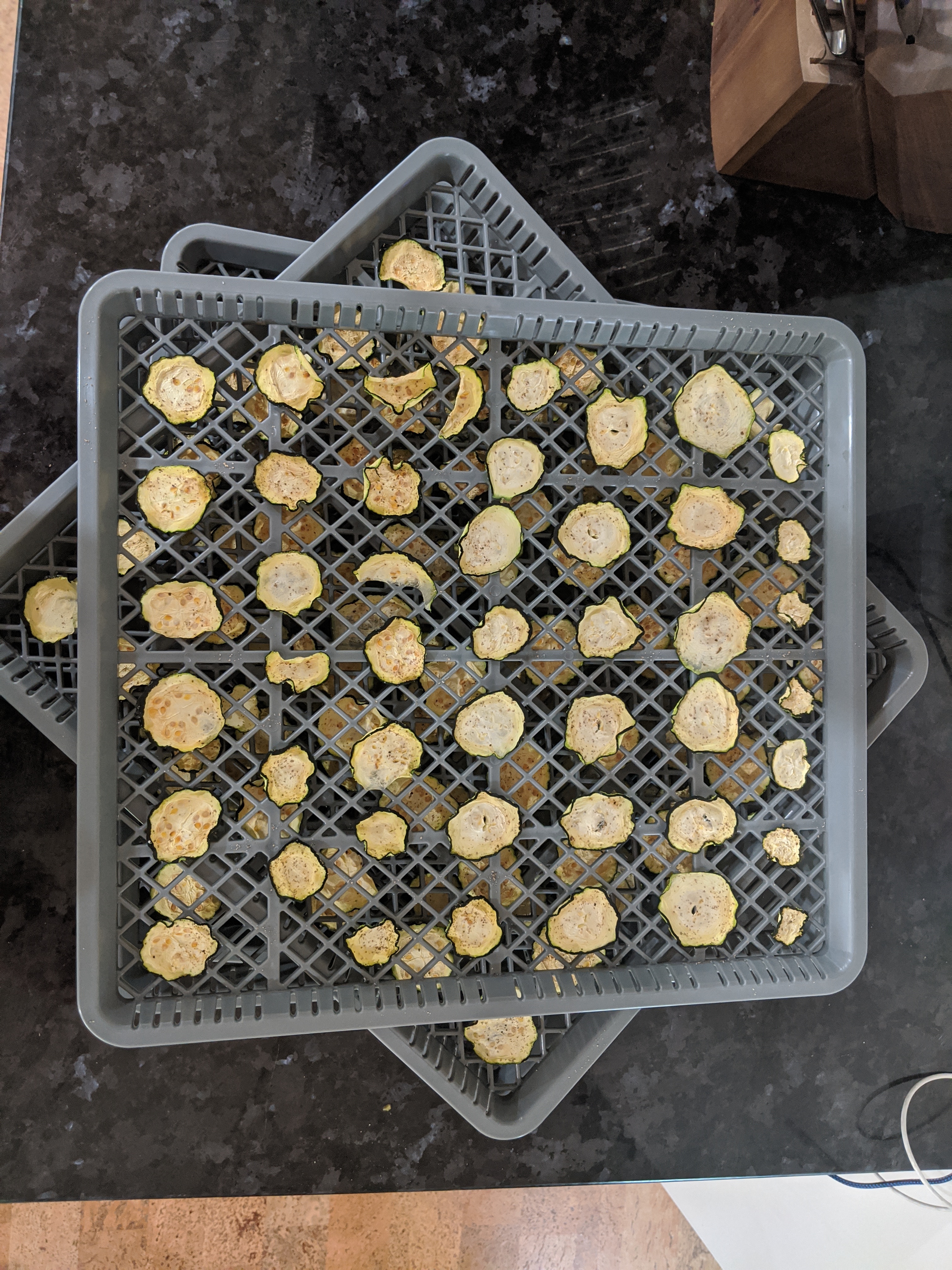
Zucchini recipes
NEXT YEAR: Plant seeds directly into the ground based on final spacing to avoid having to thin out or transplant. They could take up an entire row with one package if spaced this way. Watch out for cucumber beetles early on and be prepared to spray a couple times if needed with permethrin as well as some diamataious earth (DE) around the roots. Maybe put some DE around the seedlings as soon as they sprout as a preventative measure. Research fertilizers and see which is best for zucchini.
Beets
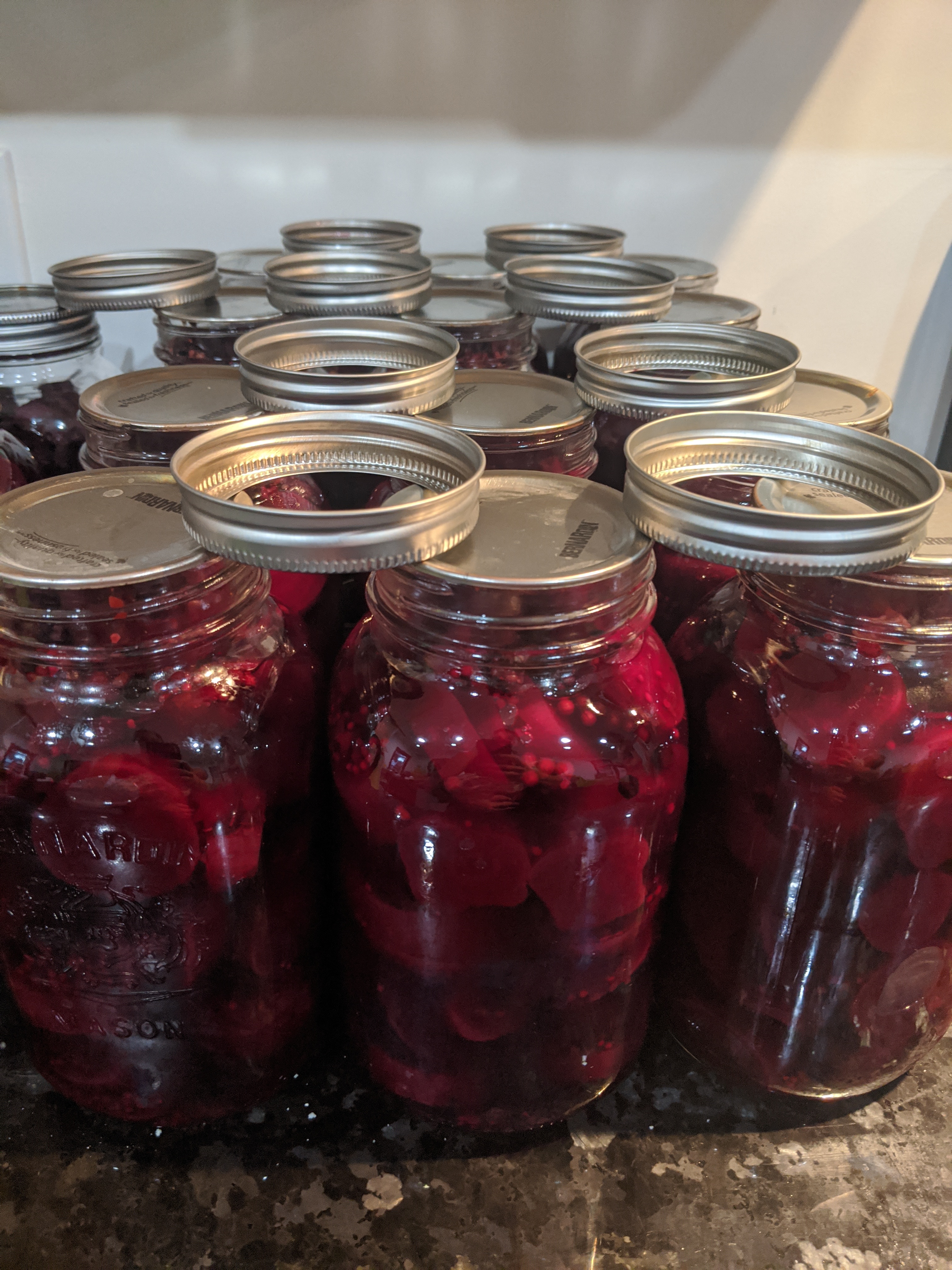
Beet (Taunus) Seeds from Veseys, great germination. Planted on ### and first harvested around July 16 (approx. 50 days). Directly planted into the ground based on seed package suggestions. I was able to do an initial thinning but not a proper secondary one to ensure there was spacing between them for the beetroot to grow to its full potential. The beet tops made a great salad. The beet tops and roots did not seem to be bothered by any specific pests and mostly grew without issue. A couple tops had a few holes from hungry bugs and some of the beetroots seem to have been visited by a chipmunk or mole. We planted 3/4 of one row but next year could easily fill a full row by planting seeds far enough so we don’t have to thin. They mature fast enough that we could do two plantings in one season. Of all the beets we harvested we were able to pickle 13L (x5 batch of Bernardin pickling brine) and make a few trays of beet chips in the dehydrator.
NEXT YEAR: Plant seeds directly into the ground with final spacing in mind so no thinning is required. Rows can be closer (5′ spacing was excessive for beets)
Peas
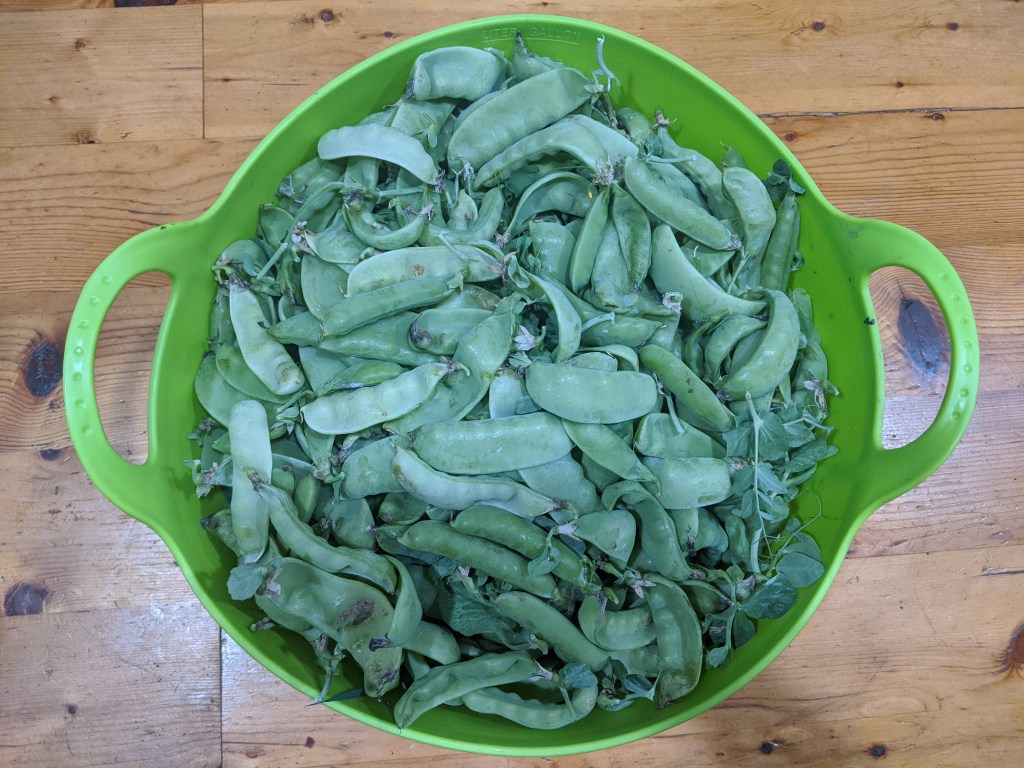
Oregon Giant Snow Pea Seeds from Veseys, planted on #### and harvested on July 20, 2020 (approx ## growing days). This type of pea seems to be hardy and tasty so we would try it again. Easy low maintenance plant that didn’t seem to be the target of a specific pest. Aphids have been an issue in the past but did not bother us this year. We added some supports (T-bar posts and an angled wire fence) for the peas to grow up on. The peas on the west (shady) side of the garden seemed to do significantly better. The heat wave we had seemed to turn some of the peas on the east side (sunny) yellow. I picked all the peas at once and we sorted them in size based on those big enough to shuck and those we would keep whole. We blanched them for 2 minites then froze most of the peas for later use.
NEXT YEAR: Plant half rows of peas, just on the west end shady side of the garden.
Beans
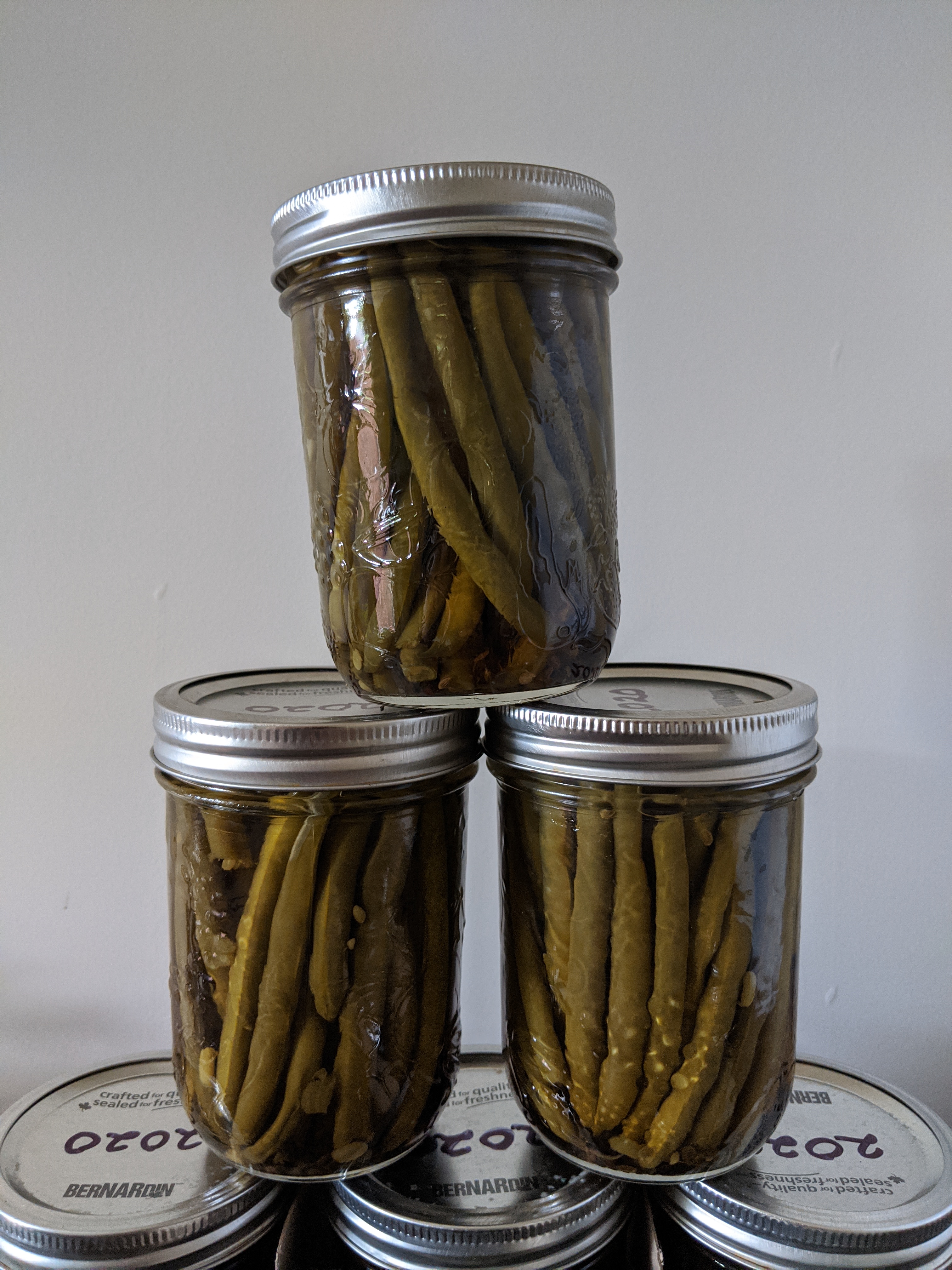
We planted two types of beans, yellow (Gold Rush) and green (Hiscock?). Both type grew well and produced many beans. The green bean plant was sturdy and stayed upright whereas the yellow bean plant produced so many beans the weight caused them to fall over so many of the yellow beans were on the ground where they were nibbled on by creatures. Many of the half eaten yellow beans were wasted. Kris really likes the flavour of the yellow beans so we’ll figure out a method to provide support. The green bean flavour was a bit lacking, the beans themselves were smaller and the flavour overall was meh. The beans were planted on #### and we started harvesting them on July 23, 2020 (## total growing days) they could have been harvested sooner. As we picked them we took out the plant so we didn’t find out if they were good for multiple yields.

